What to book, what to skip, and what to modify when your skin reacts to everything

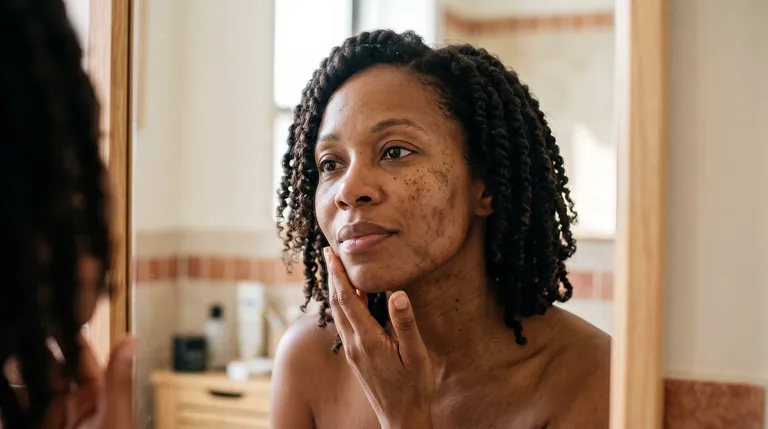
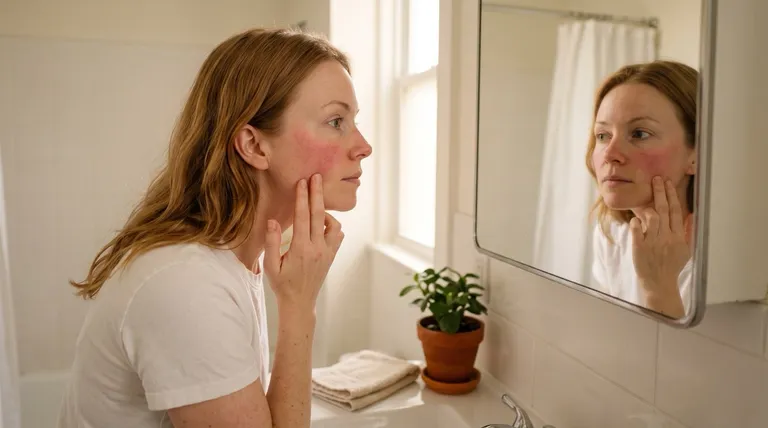
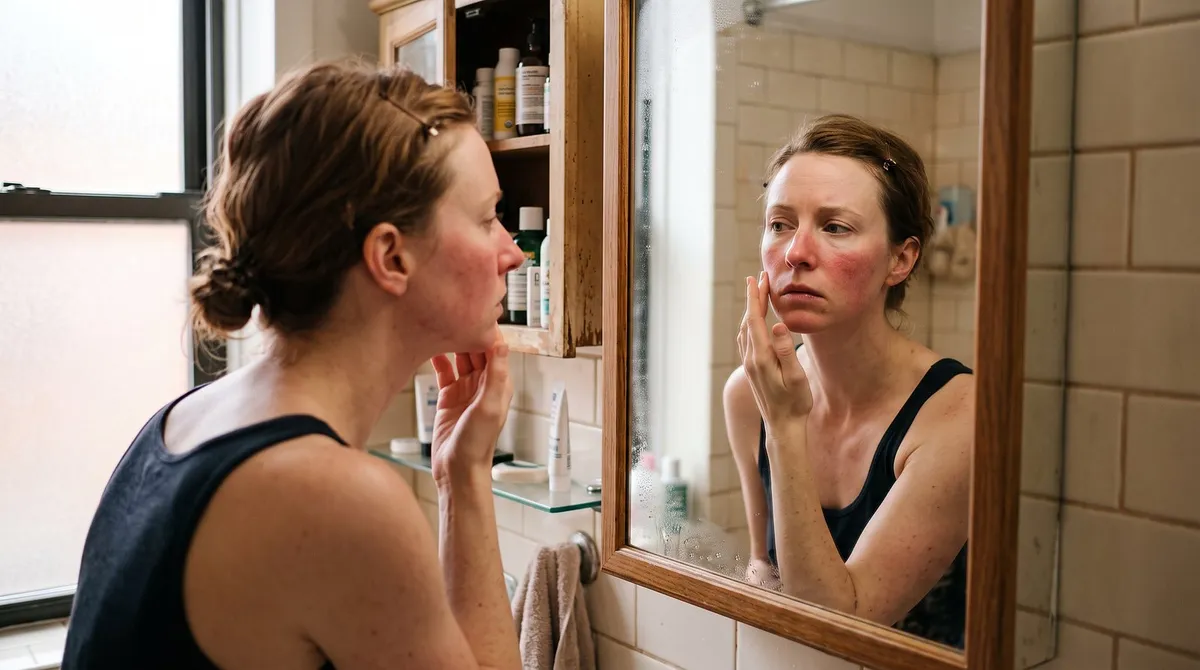
If a washcloth leaves your cheeks red for an hour, you have probably talked yourself out of booking a facial more than once. That instinct is understandable, and it is mostly wrong. Sensitive skin facials exist because reactive skin needs professional attention more than resilient skin does, not less. The trouble is that most people searching for a gentle facial in Brooklyn cannot tell a treatment designed for their skin from a standard facial with the intensity dialed down. Real reactive skin care is not a weaker version of ordinary skincare. It is a different set of decisions, made in a different order.
Sensitive Skin Facials Start With One Question: Sensitive or Sensitized?
Sensitive skin is something you were born with. You have always flushed at temperature changes, always stung with new products, and someone in your family likely does the same. Sensitized skin is something that happened to you. Over-exfoliation, a stripping cleanser, a winter of radiator heat, or a retinol scaled up too fast can wear a normal barrier down until it behaves exactly like sensitive skin.
The distinction matters because the plans diverge. Genuinely sensitive skin needs a permanently lower ceiling on intensity. Sensitized skin needs eight to twelve weeks of barrier repair, after which it often tolerates more than it did before. Sensitive skin facials only work when that question gets answered first, and any provider who skips it is working from a guess.

What Actually Works for Reactive Skin Care
The most dependable sensitive skin facials share one trait. They work with the barrier rather than through it.
Enzyme exfoliation dissolves dead surface cells without the abrasion of a scrub or the sharp pH drop of an acid. Hydrating and barrier-support facials layer humectants and lipids back onto stripped skin, which is usually the actual fix rather than a consolation prize. Manual lymphatic drainage moves inflammatory fluid out of the face and eases the puffiness that travels with a flare.
Red light therapy for inflamed, reactive skin involves no abrasion, no acid, and no heat beyond a gentle warmth, which makes it one of the few treatments most skin tolerates mid-flare rather than weeks after one. Sound reactive skin care leans on tools like this, because progress made without provoking a response compounds instead of resetting.
What to Skip While Your Skin Is Flaring
Some treatments are not wrong for you permanently. They are wrong for you this week. Reactive skin care is as much a matter of timing as it is of ingredients.
- High-percentage chemical peels applied to a compromised barrier. The peel is not the problem, the timing is.
- Aggressive extractions on already-inflamed skin, which trade one day of clearer pores for two weeks of lingering redness.
- Microneedling during an active flare, when controlled micro-injury lands on skin that cannot close it efficiently yet.
- Stacking several treatments into a single visit. Reactive skin will give you one variable at a time or it will give you nothing you can learn from.
Nothing on that list is off the table forever. Every item is a question of sequencing, and sequencing is exactly what a consultation exists to sort out.

What to Modify Instead of Canceling
Almost every standard treatment has a sensitive-skin version, and a skilled practitioner will build it in front of you.
Microdermabrasion at reduced suction with fewer passes is often enough to smooth rough texture without triggering a response. Chemical peel treatments for reactive skin can drop to a lower percentage, shorten contact time, or get patch-tested behind the ear a week ahead. Steam can be cut short or skipped, since heat is a common flush trigger with little bearing on the results of the facial itself. Appointments can also sit five or six weeks apart rather than four, handing your barrier a full turnover cycle to recover in.
A gentle facial in Brooklyn should be the product of deliberate adjustments like these, not a separate line item on a menu. The best sensitive skin facials get assembled in real time, based on what your skin is doing that morning.

Booking Sensitive Skin Facials in Brooklyn Without Guessing
Walk into your first appointment carrying information rather than hope. Bring the real names of the products you use, including the ones you tried once and abandoned, and mention any prescription topical, recent laser or wax, and any diagnosed condition such as rosacea or eczema.
Then ask three questions: what is going on my face today, what is the plan if I react tonight, and how will we know this worked. A gentle facial in Brooklyn should feel unremarkable while it is happening and obvious a week later.
Be You Esthetic Suites was founded by two sisters with more than forty years of nursing between them, and that background shows in how the private suites on Flatbush Avenue are set up. The free AI Skin Analysis maps your skin zone by zone before you commit to any single service.

Frequently Asked Questions
How long after a flare should I wait to book?
Most practitioners want to see calm skin for seven to ten days before any resurfacing work. Hydrating and barrier-focused sessions can happen sooner, sometimes as a flare is winding down, because they add to the skin rather than remove from it.
Can I get a facial while using prescription tretinoin?
Usually yes, though the common guidance is to pause the retinoid three to five days beforehand and restart once residual sensitivity settles. Tell your practitioner and your prescribing clinician, since the right pause depends on your strength and frequency.
Does sensitive skin mean I will never see real results?
No. It means results arrive through frequency instead of intensity. Sensitive skin facials are built to compound, and four measured sessions across four months routinely outperform one aggressive session followed by three months of repair.
What should I do the week before?
Stop introducing anything new. No new actives, no new cleanser, no waxing or threading inside 48 hours. A stable baseline is what allows anyone to read your skin accurately.
Your skin does not need to be talked out of professional care. It needs a plan built around how it actually behaves. Call (718) 571-8146 to start with a free AI Skin Analysis, or follow @beyou_esthetic_suites to see the space for yourself.
Medical treatments available on-site are performed exclusively by independently licensed practitioners.